A California smog check has four parts. The technician checks you in, inspects your emissions equipment by eye, checks your car’s onboard computer, and then runs an emissions test. If everything passes, the result goes to the DMV electronically. The whole visit usually takes 15 to 30 minutes.
If you have never had one done, or you are wondering what the technician is actually looking at, here is the process step by step.
Step 1: Check-In
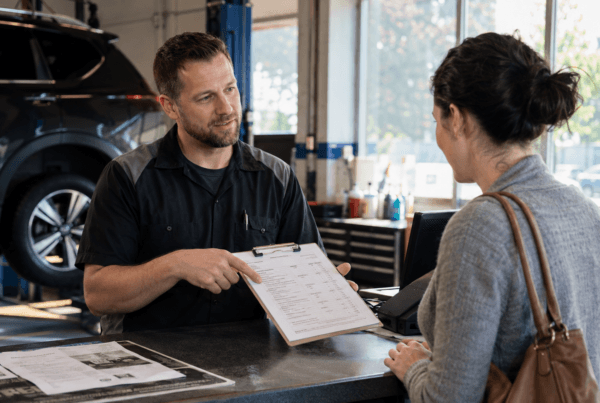
Before anything happens to the car, the technician records your vehicle details and confirms what kind of test it needs. It helps to bring your registration or your DMV renewal notice, which can also say whether your car must be tested at a STAR-certified station. Our documentation checklist lists everything worth having with you.
If you are still deciding whether you need a test at all, start with which vehicles need smog checks in California.
Step 2: The Visual Inspection
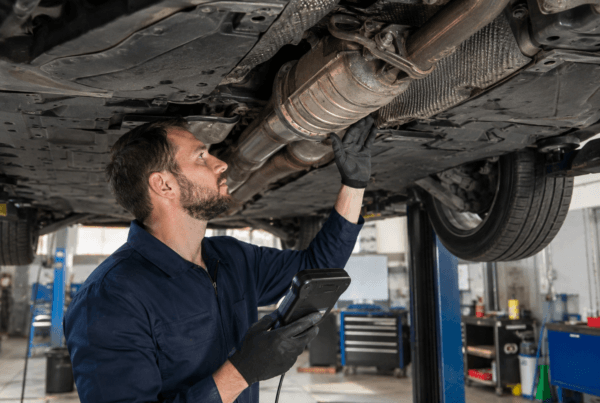
The technician looks at the emissions equipment on your car. The goal is to confirm that the required parts are present, properly installed and not damaged or tampered with. The parts they typically look at include:
- The catalytic converter
- The oxygen sensors
- The evaporative emissions system
- The PCV valve
A missing, disconnected or modified part can fail the test before any measurement is taken, which is why vehicle modifications can affect your smog check results.
Step 3: The Functional Inspection
Next comes a check of how the emissions system actually behaves. For most newer vehicles, the technician connects to the car’s onboard diagnostic system. It records trouble codes, and it reports whether the car’s emissions monitors have finished their self-checks and show a “ready” status.
Two things can stop a test here. A check engine light that is on will fail the test. A car whose monitors are not ready, which often happens after a battery disconnect or a recent repair that cleared the codes, usually cannot be tested until it has been driven enough. Our post on passing a smog check with the check engine light on explains how that works.
Step 4: The Emissions Test
The emissions test depends on your vehicle’s age.
Newer vehicles are tested mainly through the onboard computer. The system’s readings stand in for a tailpipe test, which keeps the visit short.
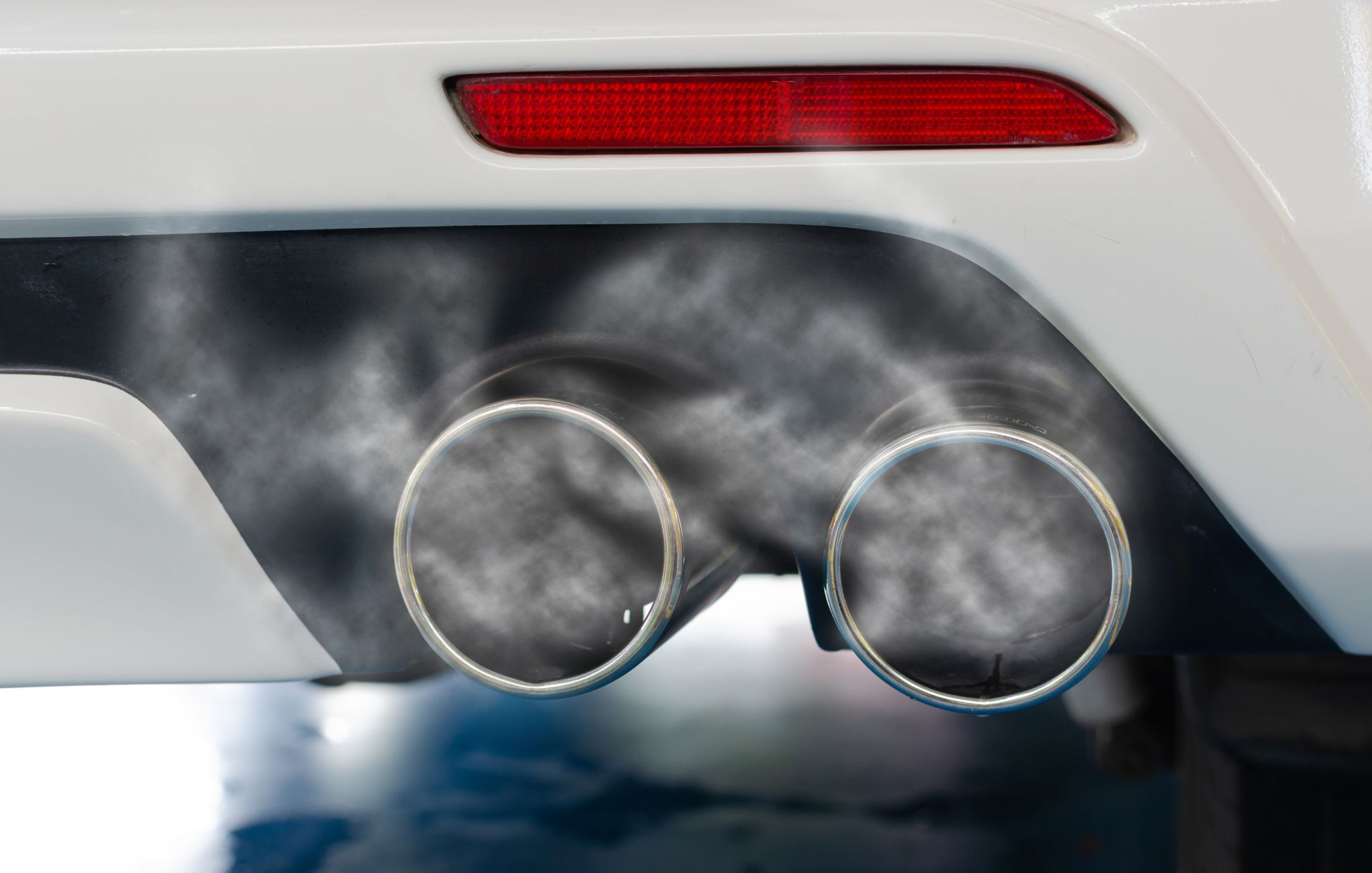
Older vehicles can get a tailpipe test. The car is run on a set of rollers, called a dynamometer, that simulate driving while a probe measures what comes out of the exhaust. The test looks at hydrocarbons, carbon monoxide and nitrogen oxides, the main pollutants behind smog.
Diesel vehicles follow a different procedure, which we explain in diesel vehicle smog checks in California. Hybrids follow the same testing rules as gasoline cars, as smog checks for hybrid vehicles shows.
Step 5: Your Results
If your car passes, the station sends the result to the DMV electronically and you get your certificate. It is valid for 90 days, so you can finish your registration within that window. See how long a smog check is good for for the details.
If your car fails, the technician gives you a report that lists what failed. Take it to a repair shop, then come back for a retest. AB Smog Check offers a pass or free re-test guarantee. The next steps are covered in the consequences of not passing a smog check, and the most common causes of failure can help you spot a problem early. If repair costs are a concern, California’s Consumer Assistance Program may help eligible owners.
Regular Station or STAR Station?
California has two types of smog check stations. A regular station can test most vehicles. A STAR-certified station meets higher performance standards and can test every vehicle, including ones that the DMV directs to a STAR station. The test itself is the same, so the difference is mostly about which cars each station is allowed to test. We explain it in what a STAR station smog check is, and the Bureau of Automotive Repair describes the program on bar.ca.gov.
How to Make the Visit Go Smoothly
Fix the check engine light before you go, since nothing else matters if it is on. Drive for 10 to 15 minutes beforehand so the engine and catalytic converter are warm. Avoid arriving the day your registration expires, because the last-minute rush is what turns a 20 minute test into a long wait. Our pre-test checklist and guide to preparing for your smog check go through the rest, and how long a smog check takes explains what slows a visit down.
If you want to see what the state already has on file for your vehicle, checking your vehicle’s smog check history takes about two minutes. And if you are not sure when your next test is due, see how often you need a smog check.
Frequently Asked Questions
What does a smog check look for?
It checks that your emissions parts are present and unmodified, that your onboard computer reports no problems and that your emissions are within the allowed limits.
Is the smog check the same as an emissions test?
The emissions test is one part of the smog check. The full inspection also includes the visual and functional checks.
Does the technician need to see under the hood?
Yes, the visual inspection covers the emissions equipment, and some of it sits under the hood.
Will I have to leave my car?
Most people wait while the test is done. At about 15 to 30 minutes, it is usually quicker than coming back.
What happens if my check engine light is on?
The car will not pass. Get the cause diagnosed and repaired first.
Do I need an appointment?
At AB Smog Check, no. You can walk in during business hours.
Get Your Smog Check at AB Smog Check in Monterey Park
Our STAR-certified station tests both regular and STAR-required vehicles, so you only need one stop. We will tell you what the technician is doing and give you a plain explanation of your result afterward.
AB Smog Check 501 E Garvey Ave, Monterey Park, CA 91755 Phone: 626-280-2678
Hours: Monday to Friday, 9:00 am to 5:00 pm Saturday, 9:00 am to 3:00 pm Sunday, closed
No appointment necessary. Pass or have a free re-test.